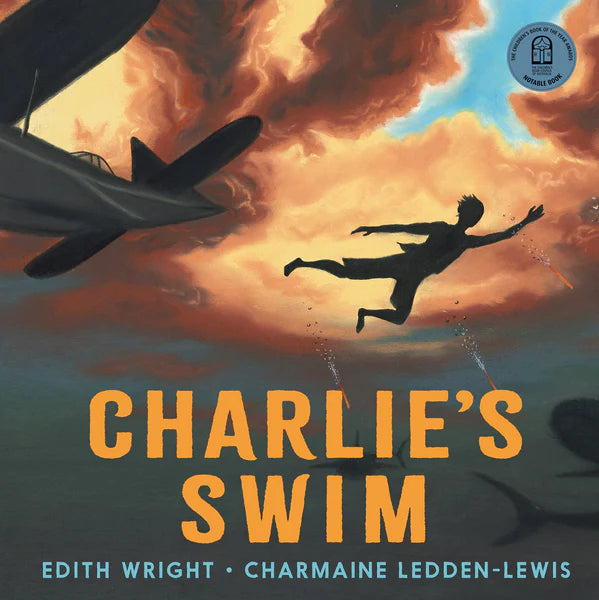
Charlie's Swim
Charlie's Swim
Couldn't load pickup availability
Based on the true story of Charles D’Antoine, who rescued people during the 1942 Japanese air attack on Broome and waited decades for Australian recognition.
Creator: Edith Wright; illustrated by Charmaine Ledden-Lewis
📘 For teachers: classroom and curriculum guide
Suggested level: Years 3-7
Learning areas: English; Humanities and Social Sciences
Cross-curriculum priorities: Aboriginal and Torres Strait Islander Histories and Cultures, with connections to People, Culture and Country/Place through First Nations wartime service, courage, recognition and historical truth-telling.
🧭 Suggested Australian Curriculum V9 content descriptions:
AC9E6LE01: identify responses to characters and events in literary texts drawn from historical, social or cultural contexts
AC9HS6K02: changes in Australia's political system and citizenship after Federation that impacted First Nations Australians and others
These are suggested starting points. Teachers should confirm the selected year-level content descriptions against their local program and student needs.
Learning focus: World War II, Broome, courage, historical recognition and biography.
Practical lesson sequence
- Before: Introduce the learning focus and essential vocabulary. Invite prior knowledge without requiring students to disclose personal or family experiences.
- During and after: Locate Broome and build a concise event timeline, separate documented facts from narrative reconstruction, then design a citation recognising Charlie’s actions and explaining why recognition matters.
- Evidence of learning: An historically accurate commemorative citation with supporting evidence.
Curriculum reference: Use the suggested connections to select the most appropriate content descriptions for your year level and local program. See the Australian Curriculum Version 9.0 and the Aboriginal and Torres Strait Islander Histories and Cultures cross-curriculum priority.
Respectful teaching
Preview the text for your learners and local context. Present Aboriginal and Torres Strait Islander peoples, cultures and knowledges as living and diverse. Do not expect Aboriginal or Torres Strait Islander students to speak for others. Where local knowledge is involved, seek guidance from local rights holders and approved Community sources.
Share