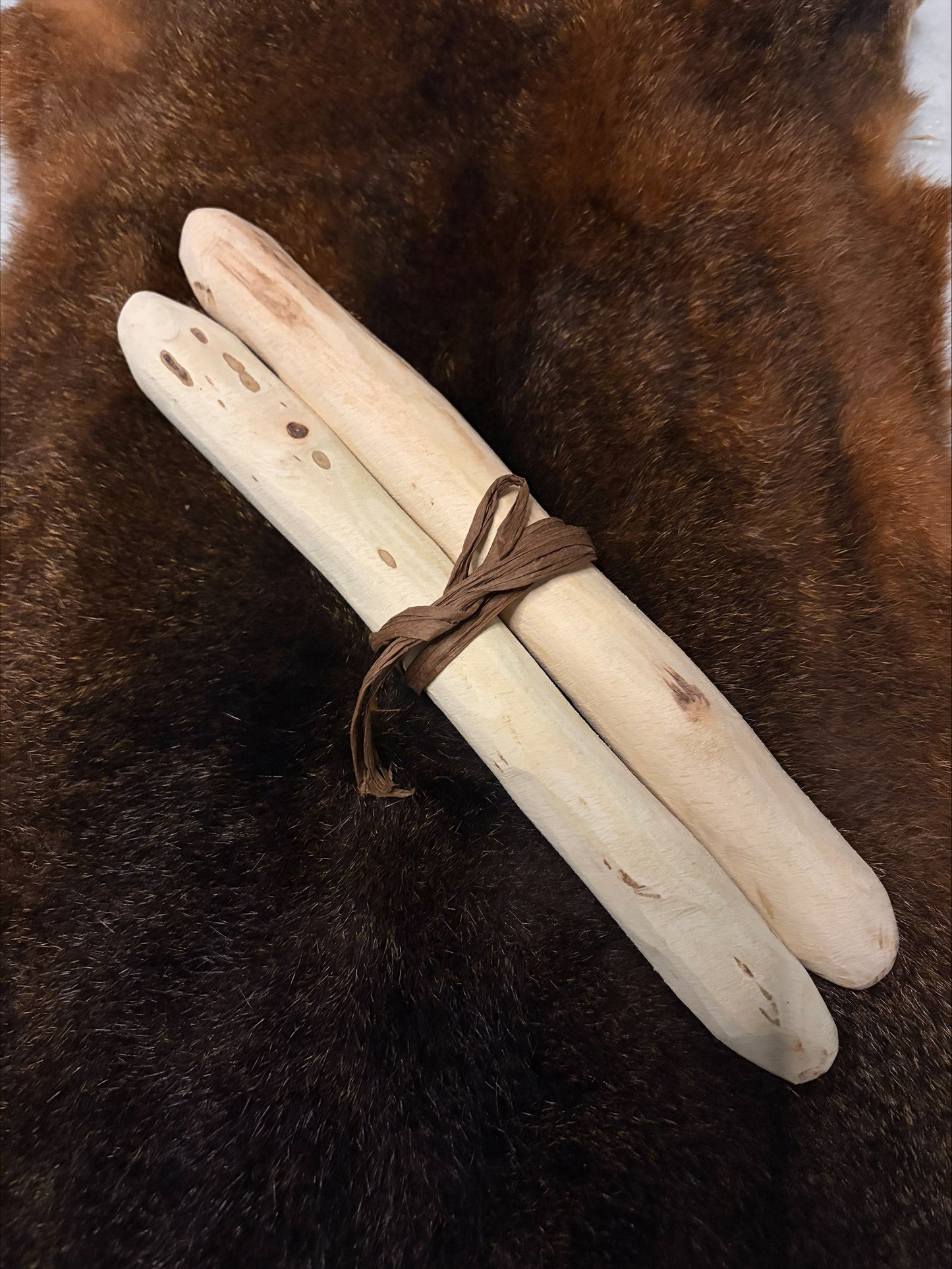
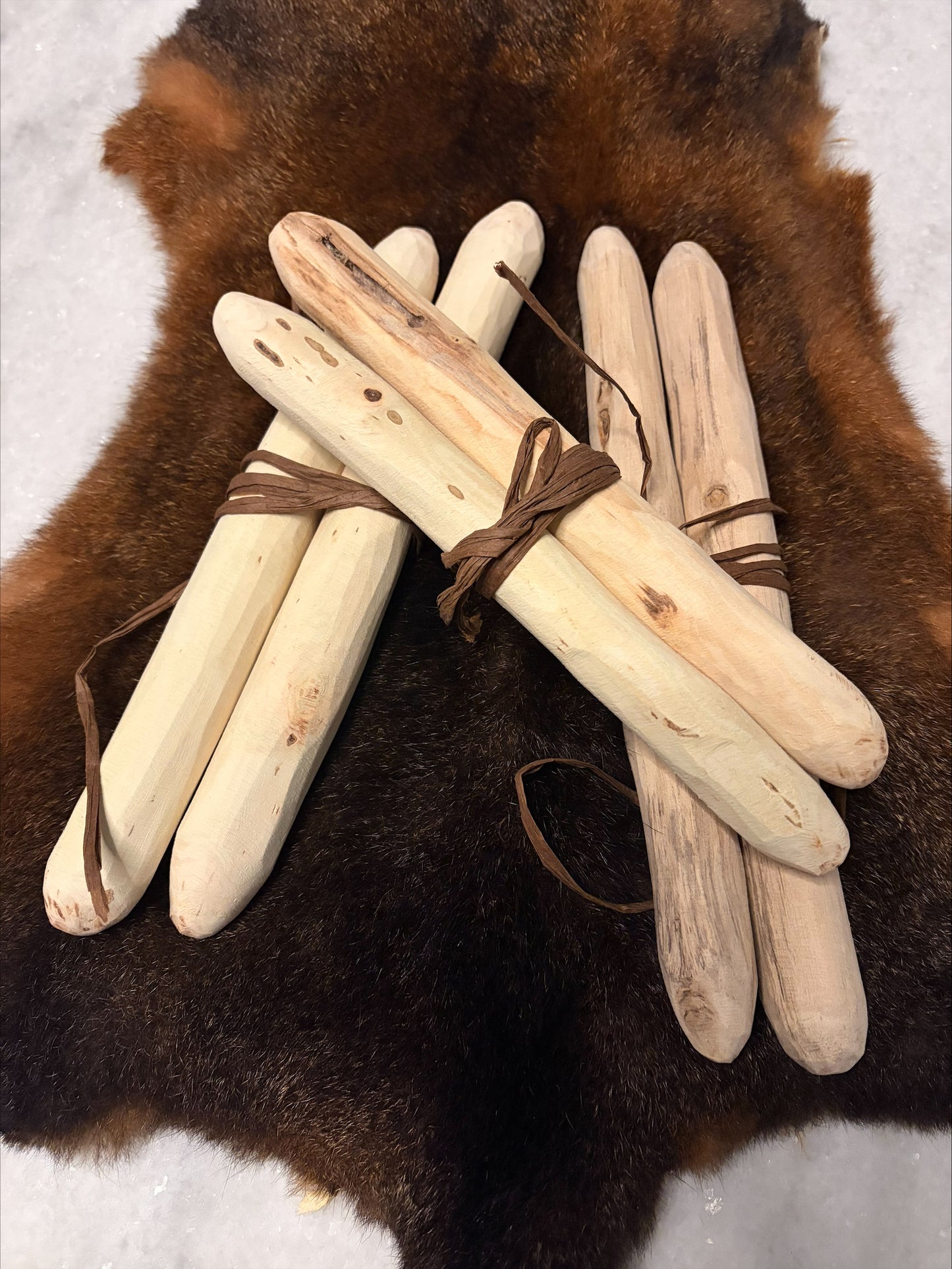
Rough-Sanded Timber Clapsticks (Pair)
Rough-Sanded Timber Clapsticks (Pair)
Couldn't load pickup availability
Made by Djuker Willis Hart. Sold as one pair: 2 clapsticks.
Rough-Sanded Clapsticks (Pair)
Currently sold out: Rough-Sanded clapsticks are temporarily unavailable. Please contact us if you would like to enquire about the next batch.
These handcrafted clapsticks are made from sustainably sourced Australian timbers, including Dogwood, Tea Tree or Eucalypt, depending on seasonal availability. The timber species cannot be selected, with each pair showcasing the natural beauty and character of the wood provided by Country.
Each pair receives a rough machine sand only and retains its natural texture and character rather than a polished finish. This makes them an excellent choice for classrooms, cultural workshops and those who appreciate a more natural appearance. They can also be further sanded, painted or decorated if desired.
Clapsticks, known by many Aboriginal communities as Bilma, are among Australia's oldest and most recognisable traditional musical instruments. Used for countless generations across many Aboriginal Nations, they provide rhythm for song, dance, storytelling and ceremony, and continue to play an important role in cultural practice, education and community life today.
Every Handcrafted Pair is Unique
Because the premium and Rough-Sanded clapsticks are handcrafted from natural Australian timber, variations in colour, grain, diameter, weight and shape are all part of their unique character. These natural differences are not imperfections but a reflection of the handcrafted process and the individual timber selected by the artist.
Sold as one pair (2 clapsticks).
A Note on Cultural Respect
For schools, early learning services and groups decorating Rough-Sanded or Workshop Dowel clapsticks.
This guidance applies particularly to the Rough-Sanded and Workshop Dowel options when children, students or groups may paint, burn, engrave, carve, draw on or otherwise mark the sticks as part of Aboriginal cultural learning. A blank or unfinished surface is not permission to apply Aboriginal designs or teach cultural practices.
Plan cultural learning with local guidance and consent.
Buying timber, or buying clapsticks from us, does not provide permission to teach Aboriginal cultural knowledge or copy Aboriginal designs. If the making, decorating or use of these sticks is being presented as an Aboriginal cultural activity, plan it with local Aboriginal Knowledge Holders or Knowledge Sharers, or a local Aboriginal community-controlled organisation.
Seek their guidance and consent before proceeding, including agreement about the knowledge, designs, stories and practices that may be shared, who should lead the activity, and how people will be acknowledged and paid for their time and expertise. Do not copy cultural designs, symbols, stories or practices without permission from the people who hold that knowledge. Permission for one activity should not be assumed to cover future activities.
Without that cultural guidance and consent, describe the activity as general woodworking or rhythm-stick making rather than an Aboriginal cultural activity.
Meet the maker: Djuker Willis Hart

Djuker Willis Hart grew up learning and sharing culture through family. He is an experienced cultural practitioner, artist, craftsperson and guide whose work spans dance and music, bush foods and medicines, reading Country, cultural land management and the making of traditional tools and objects. His practice includes clapsticks, waddies, spears, rope, canoes, huts, didgeridoos and painted work, as well as cultural walks, workshops and conversations about cultural awareness, etiquette and boundaries.