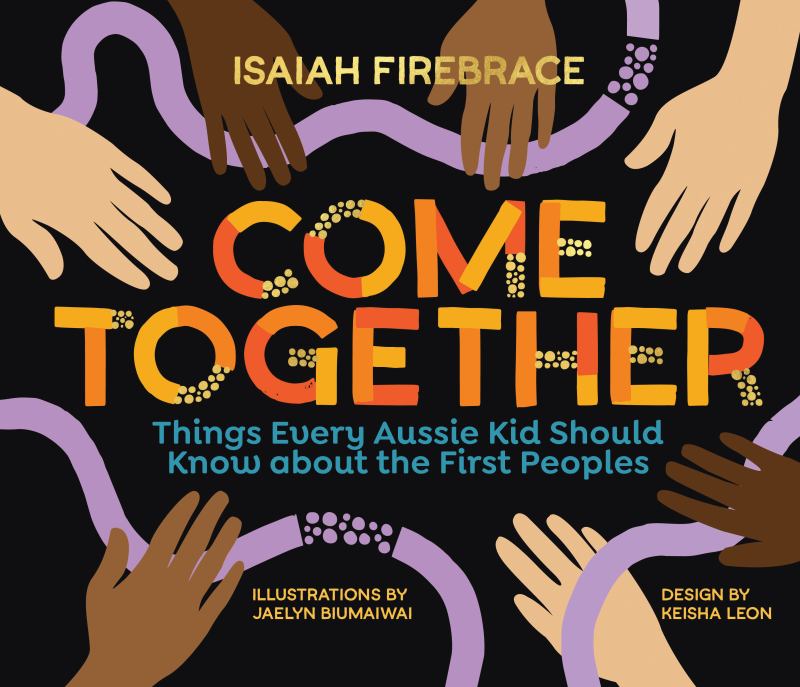
Come Together
Come Together
Couldn't load pickup availability
An accessible introduction to First Nations cultures, histories and contemporary experiences, connected through the author’s personal perspective.
Creator: Isaiah Firebrace; illustrated by Jaelyn Biumaiwai
📘 For teachers: classroom and curriculum guide
Suggested level: Years 3-8
Learning areas: English; Humanities and Social Sciences
Cross-curriculum priorities: Aboriginal and Torres Strait Islander Histories and Cultures, with connections to Country/Place, Culture and People through living cultures, histories, Elders, identity and contemporary First Nations experience.
🧭 Suggested Australian Curriculum V9 content descriptions:
AC9E7LE01: identify and explore ideas, points of view, characters, events and issues in literary texts drawn from historical, social or cultural contexts
AC9HS4K01: the diversity of First Nations Australians, their social organisation and continuous connection to Country/Place
These are suggested starting points. Teachers should confirm the selected year-level content descriptions against their local program and student needs.
Learning focus: diversity, identity, history, contemporary cultures and respectful terminology.
Practical lesson sequence
- Before: Introduce the learning focus and essential vocabulary. Invite prior knowledge without requiring students to disclose personal or family experiences.
- During and after: Assign small groups one topic to summarise, distinguish general information from the author’s personal experience, verify key facts through an authoritative source and combine findings into a class knowledge wall.
- Evidence of learning: A sourced explanatory text that avoids treating First Nations peoples and cultures as one homogeneous group.
Curriculum reference: Use the suggested connections to select the most appropriate content descriptions for your year level and local program. See the Australian Curriculum Version 9.0 and the Aboriginal and Torres Strait Islander Histories and Cultures cross-curriculum priority.
Respectful teaching
Preview the text for your learners and local context. Present Aboriginal and Torres Strait Islander peoples, cultures and knowledges as living and diverse. Do not expect Aboriginal or Torres Strait Islander students to speak for others. Where local knowledge is involved, seek guidance from local rights holders and approved Community sources.
🎓 For staff professional learning
🎓 Suggested AITSL connections:
1.4: Strategies for teaching Aboriginal and Torres Strait Islander students
2.4: Understand and respect Aboriginal and Torres Strait Islander people to promote reconciliation between Indigenous and non-Indigenous Australians
6.2: Engage in professional learning and improve practice
6.3: Engage with colleagues and improve practice
View the Australian Professional Standards for Teachers.
Suggested use: Use as an entry point for staff knowledge-building and a resource audit. Identify generalisations, locate local and Nation-specific sources, and plan how to move from awareness to curriculum action.
45 to 60 minute staff activity: Read an agreed excerpt before the session. Use 15 minutes for individual reflection, 20 minutes for professional dialogue, and 15 minutes to identify one practical change. Record the intended impact, evidence to be collected and a review date.
This is a suggested standards connection, not AITSL endorsement or accredited professional development. Reading should be combined with reflection, professional dialogue, action and evaluation of impact.
Share