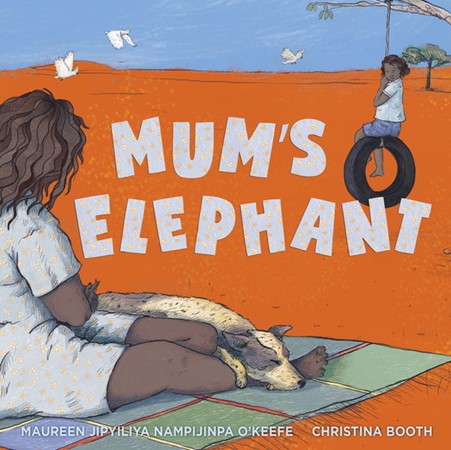
Mum's Elephant
Mum's Elephant
Couldn't load pickup availability
A warm family story about a treasured object, childhood imagination and the simple possessions that can hold deep personal meaning.
Creator: Maureen Jipiyiliya Nampijinpa O’Keefe; illustrated by Christina Booth
📘 For teachers: classroom and curriculum guide
Suggested level: Foundation-Year 3
Learning areas: English; Humanities and Social Sciences
Cross-curriculum priorities: Aboriginal and Torres Strait Islander Histories and Cultures, with connections to Culture and People through family memory, identity, storytelling and the meaning held by objects.
🧭 Suggested Australian Curriculum V9 content descriptions:
AC9E1LE01: discuss how language and images create characters, settings and events in literature by First Nations Australian and other authors and illustrators
AC9HSFK04: the importance of Country/Place to First Nations Australians and the Country/Place on which the school is located
These are suggested starting points. Teachers should confirm the selected year-level content descriptions against their local program and student needs.
Learning focus: family memories, treasured objects and personal histories.
Practical lesson sequence
- Before: Introduce the learning focus and essential vocabulary. Invite prior knowledge without requiring students to disclose personal or family experiences.
- During and after: Use the cover and title to predict what the ‘elephant’ may be. After reading, students bring, draw or describe a safe treasured object and explain the memory or relationship it represents.
- Evidence of learning: A labelled drawing or short oral presentation linking an object to a personal story.
Curriculum reference: Use the suggested connections to select the most appropriate content descriptions for your year level and local program. See the Australian Curriculum Version 9.0 and the Aboriginal and Torres Strait Islander Histories and Cultures cross-curriculum priority.
🌱 For early years educators: Early Years Learning Framework V2.0
Suggested EYLF V2.0 outcome elements:
1.3: Build knowledgeable and confident self-identities and a sense of personal worth
5.1: Interact verbally and non-verbally with others for a range of purposes
5.4: Express ideas and make meaning using a range of media
View ACECQA's EYLF V2.0 to Australian Curriculum mapping.
Respectful teaching
Preview the text for your learners and local context. Present Aboriginal and Torres Strait Islander peoples, cultures and knowledges as living and diverse. Do not expect Aboriginal or Torres Strait Islander students to speak for others. Where local knowledge is involved, seek guidance from local rights holders and approved Community sources.
Share