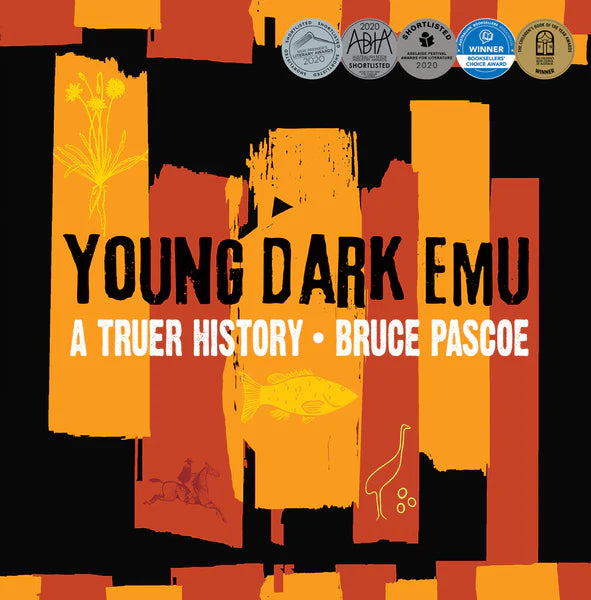
Young Dark Emu
Young Dark Emu
Couldn't load pickup availability
Using records written by early Europeans, this book invites younger readers to reconsider assumptions about Aboriginal agriculture, housing, food production and land management before colonisation.
Creator: Bruce Pascoe
📘 For teachers: classroom and curriculum guide
Suggested level: Years 5-9
Learning areas: English; Humanities and Social Sciences; Science
Cross-curriculum priorities: Aboriginal and Torres Strait Islander Histories and Cultures, with connections to Country/Place, Culture and People through First Nations agriculture, housing, food production, evidence and land management. Sustainability, through sustainable agriculture, resource use, land management and First Nations knowledges for healthy Country.
🧭 Suggested Australian Curriculum V9 content descriptions:
AC9E7LE01: identify and explore ideas, points of view, characters, events and issues in literary texts drawn from historical, social or cultural contexts
AC9HH7K05: the technological achievements of early First Nations Australians and their contribution to daily life and land and water management
These are suggested starting points. Teachers should confirm the selected year-level content descriptions against their local program and student needs.
Learning focus: historical sources, pre-colonial societies, land management, evidence and interpretation.
Practical lesson sequence
- Before: Introduce the learning focus and essential vocabulary. Invite prior knowledge without requiring students to disclose personal or family experiences.
- During and after: Examine a small set of claims and quoted primary-source observations, distinguish observation from interpretation, compare with another authoritative First Nations or scholarly source, and construct a qualified conclusion.
- Evidence of learning: A source-analysis table and evidence-based conclusion acknowledging limitations.
Curriculum reference: Use the suggested connections to select the most appropriate content descriptions for your year level and local program. See the Australian Curriculum Version 9.0 and the Aboriginal and Torres Strait Islander Histories and Cultures cross-curriculum priority.
Respectful teaching
Preview the text for your learners and local context. Present Aboriginal and Torres Strait Islander peoples, cultures and knowledges as living and diverse. Do not expect Aboriginal or Torres Strait Islander students to speak for others. Where local knowledge is involved, seek guidance from local rights holders and approved Community sources.
🎓 For staff professional learning
🎓 Suggested AITSL connections:
2.4: Understand and respect Aboriginal and Torres Strait Islander people to promote reconciliation between Indigenous and non-Indigenous Australians
3.2: Plan, structure and sequence learning programs
6.2: Engage in professional learning and improve practice
6.3: Engage with colleagues and improve practice
View the Australian Professional Standards for Teachers.
Suggested use: Use in staff professional learning to examine how curriculum narratives are selected and how teachers can teach contested interpretations responsibly. Plan a source-rich sequence that includes diverse First Nations scholarship and local context.
45 to 60 minute staff activity: Read an agreed excerpt before the session. Use 15 minutes for individual reflection, 20 minutes for professional dialogue, and 15 minutes to identify one practical change. Record the intended impact, evidence to be collected and a review date.
This is a suggested standards connection, not AITSL endorsement or accredited professional development. Reading should be combined with reflection, professional dialogue, action and evaluation of impact.
Share